
Updated:
AI-powered local SEO software can help you improve your visibility in Google Search, Google Maps, and AI-driven search results, but it cannot guarantee rankings or AI mentions. The right tool automates repetitive optimization work, follows Google's published guidance, and gives you a clear record of what was done. The wrong tool wastes your budget on tasks that don't move the needle. This article explains what AI-powered local SEO software actually does, what to verify before you choose, and how to avoid common mistakes.
Key Takeaways

- AI-powered local SEO software can automate tasks like website improvements, Google Business Profile updates, and content creation, but it cannot guarantee rankings or AI citations.
- Google's local ranking factors (relevance, distance, prominence) are separate from its AI search features. No special optimization is required for AI Overviews or AI Mode beyond standard SEO practices.
- Before choosing a tool, verify what it actually does, whether it follows Google's guidance, and whether its scope matches your business needs.
- Vigilnode offers AI SEO and GEO services, Google Search and Maps SEO, and AI search visibility optimization, but you should evaluate any tool against your specific goals.
What Does AI-Powered Local SEO Software Actually Do?
AI-powered local SEO software uses artificial intelligence to automate parts of the search optimization process. For local businesses, this typically includes tasks like:
- Improving website content and structure to align with search intent.
- Updating Google Business Profile information to be complete and accurate.
- Creating and publishing blog articles targeted at local search queries.
- Tracking search visibility across Google and AI platforms.
However, the term "AI-powered" covers a wide range of tools. Some tools simply use AI to generate content, while others integrate AI into a broader workflow that includes technical SEO, local listing management, and reporting. The key is to understand what the software actually does, not just what it claims to do.
What Google Says About Local Ranking
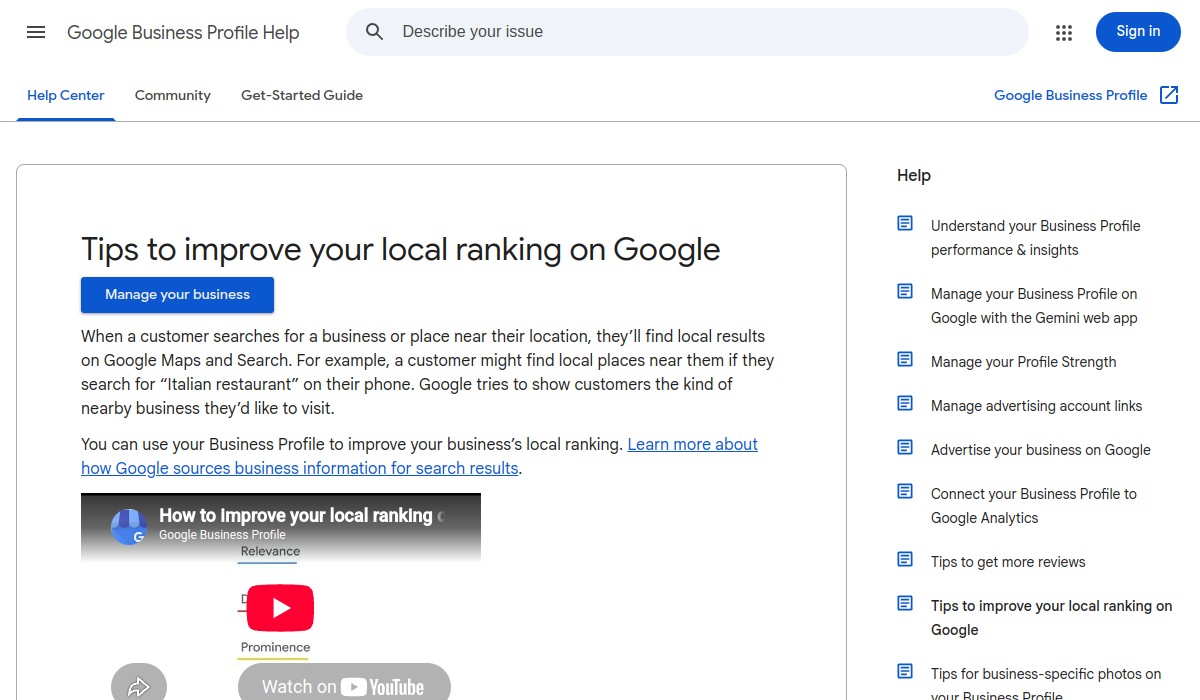
Google's documentation states that local results are mainly based on three factors: relevance, distance, and prominence. Complete and accurate Business Profile information can make a profile more likely to appear for relevant local searches. This means that any local SEO software should help you maintain accurate business information, but it cannot control distance or guarantee prominence. Google's local ranking guidance explains these factors in detail.
What Google Says About AI Search Features
Google's guidance on AI features like AI Overviews and AI Mode is clear: there is no special optimization or additional technical requirement for these features. Helpful, reliable, people-first content and standard technical SEO apply to both regular Google Search and Google's AI features. A page must be indexed and eligible for a Search snippet to be eligible as a supporting link, but crawling, indexing, rankings, and inclusion are never guaranteed. Google's guidance on third-party SEO tools warns that no tool can guarantee performance.
When Is AI-Powered Local SEO Software a Suitable Option?
AI-powered local SEO software can be a suitable option if you need to save time on repetitive optimization tasks and want a systematic approach to improving your local search presence. It is particularly useful for businesses that:
- Have limited time to manually update their website and Google Business Profile.
- Want to create consistent, locally relevant content without hiring a full-time writer.
- Need to track visibility across multiple search platforms, including Google and AI assistants.
However, it is not a magic solution. If your business has fundamental issues like an inaccurate address, poor customer reviews, or a website that is not mobile-friendly, software alone will not fix those problems. You need to address the underlying issues first.
What Should You Verify Before Choosing AI-Powered Local SEO Software?

Before you commit to any AI-powered local SEO software, verify the following:
- What tasks does it actually automate? Does it just generate content, or does it also help with technical SEO, local listings, and reporting?
- Does it follow Google's published guidance? Google warns that tools cannot guarantee performance and recommends evaluating third-party SEO advice against official guidance.
- What is the scope of its AI capabilities? Does it optimize for AI search visibility, or does it only focus on traditional Google Search?
- What evidence does it provide? Can you see a clear record of what was done, or does it just show a dashboard with vague metrics?
Google's guidance on third-party SEO tools is clear: no tool can guarantee rankings, and you should be skeptical of any tool that promises specific results. A good tool will help you follow best practices, but the outcome depends on many factors outside the tool's control.
Common Mistakes to Avoid
Many businesses make the same mistakes when choosing AI-powered local SEO software. These include:
- Buying a tool that automates the wrong tasks, such as generating low-quality content that doesn't help users.
- Trusting a dashboard that hides weak data or doesn't show actual changes made.
- Expecting a guarantee that Google says no tool can provide.
- Ignoring the importance of Google Business Profile accuracy and customer reviews.
For a deeper look at these mistakes, see our article on 7 AI-Powered Local SEO Software Mistakes That Cost You Visibility.
How Does Vigilnode Fit Into This Picture?
Vigilnode is an AI SEO and GEO service for local businesses. According to its website, it offers AI SEO and GEO service, AI search visibility optimization, and Google Search and Maps SEO. It also provides website improvement, Google profile improvement, AI-targeted blog article creation and publishing, search visibility tracking, and Google review activity.
These capabilities align with the tasks that AI-powered local SEO software should handle: improving your website, maintaining your Google Business Profile, creating relevant content, and tracking visibility. However, as with any tool, you should verify that its specific approach fits your business needs and that it follows Google's guidance.
For a step-by-step process to evaluate AI-powered local SEO software, see our guide on How to Choose AI-Powered Local SEO Software: A Practical Comparison Process.
What Are the Limitations and Alternatives?
AI-powered local SEO software has limitations. It cannot guarantee rankings, AI mentions, or customer calls. It also cannot replace the need for a good product or service, accurate business information, and positive customer experiences. If you are looking for a tool that will magically put you at the top of Google Maps or make ChatGPT recommend you, you will be disappointed.
Alternatives to AI-powered software include hiring a human SEO consultant, doing the work manually, or using a combination of tools. The right choice depends on your budget, time, and expertise. If you have the resources, a human expert can provide personalized advice and adapt to changes quickly. If you prefer a more automated approach, software can save time but requires careful selection.
Frequently Asked Questions
Can AI-powered local SEO software guarantee top rankings in Google Maps?
No. Google's documentation states that local results are mainly based on relevance, distance, and prominence. No tool can control distance or guarantee prominence, and Google explicitly warns that tools cannot guarantee performance.
Do I need special optimization for Google's AI features like AI Overviews?
No. Google's guidance says there is no special optimization or additional technical requirement for AI features. Helpful, reliable, people-first content and standard technical SEO apply to both regular Google Search and Google's AI features.
What should I look for in AI-powered local SEO software?
Look for a tool that automates the right tasks, follows Google's published guidance, provides transparent reporting, and fits your business goals. Avoid tools that promise guaranteed results or hide what they actually do.
What Should You Do Next?
If you are evaluating AI-powered local SEO software, start by defining your goals. What do you want to achieve? More visibility in Google Maps? Better rankings for specific keywords? Inclusion in AI answers? Once you know your goals, you can evaluate tools against those criteria.
Next, ask for a demo or trial and test the tool on a small scale. Look for evidence that it actually does what it claims. Check whether it follows Google's guidance and whether it provides transparent reporting. Finally, compare a few options before making a decision.
For a comprehensive buyer's guide, see our article on AI Local SEO Software: A Buyer's Guide. And if you want to understand how AI SEO agents work for local businesses, read AI SEO Agent for Local Business: Google Maps and AI Search.
Remember, the goal is not to find the tool with the most features, but the one that fits your business and helps you achieve measurable results.