
Updated:
Most local SEO tool comparisons read like feature lists. The real question is which tool fits your business, your budget, and the outcomes you actually need. This guide gives you a neutral framework to compare options—no winner declared, just the criteria that matter and the tradeoffs to weigh.
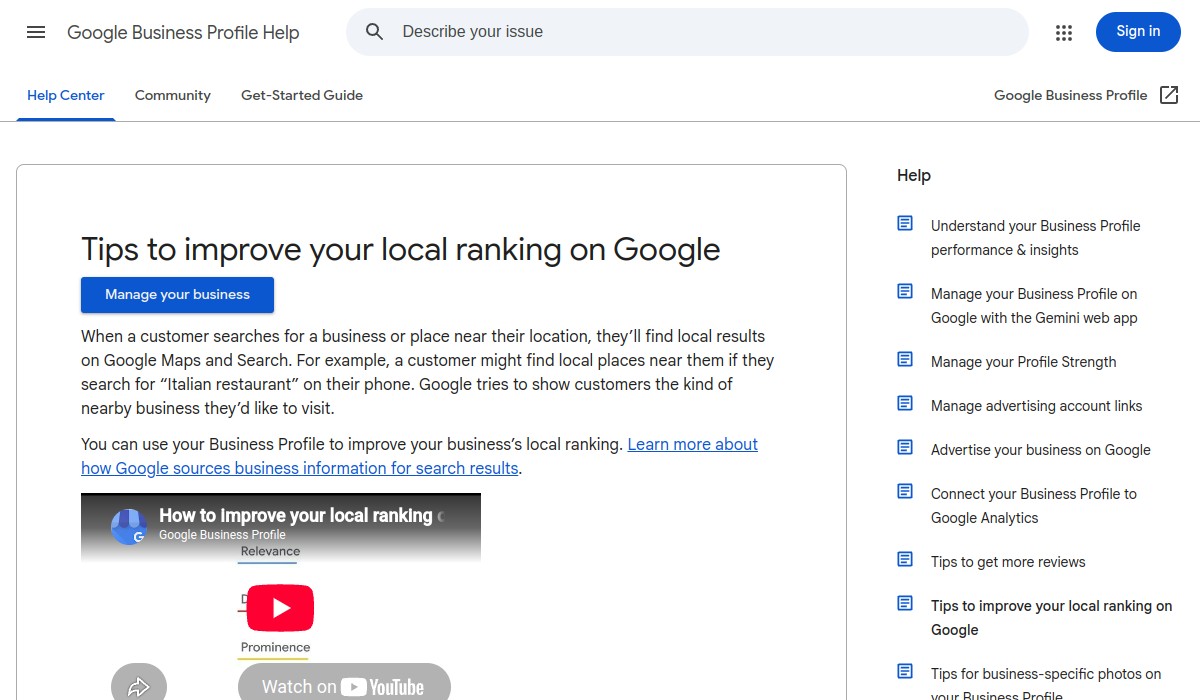
Verified source context: Google says local results are mainly based on relevance, distance, and prominence. Complete and accurate Business Profile information can make a profile more likely to appear for relevant local searches. Read Tips to improve your local ranking on Google.
Verified source context: Google recommends crawlable anchor elements, descriptive and concise anchor text, and contextual internal links. It also recommends citing useful external sources when doing so helps readers. Read Link best practices for Google.
Key Takeaways

- No single tool is best for every business. Your choice depends on whether you need hands-on control, automation, or agency-level reporting.
- Google Business Profile management, citation building, review monitoring, and rank tracking are the core capabilities to compare.
- AI visibility is a newer consideration, but Google says standard SEO practices apply to AI features—no special optimization is required.
- Always verify claims with a trial or demo, and check whether the tool follows Google's guidance on local ranking factors.
What should I look for in a local SEO tool?
Start with the outcome you need. A tool that automates citations may not help you respond to reviews, and a rank tracker won't optimize your Google Business Profile. Define your priorities before comparing features.
Google says local results are mainly based on relevance, distance, and prominence. Complete and accurate Business Profile information can make a profile more likely to appear for relevant local searches. So any tool you choose should help you keep that information accurate and complete.
Beyond that, consider these neutral criteria:
- Google Business Profile management: Can it update hours, services, photos, and posts? Does it flag incomplete fields?
- Citation building and monitoring: Does it distribute your business information to directories and track inconsistencies?
- Review monitoring and response: Does it aggregate reviews from multiple platforms and let you respond from one dashboard?
- Local rank tracking: Does it show where you appear in map packs and local search results for target keywords?
- AI visibility support: Does it help you create content that follows Google's guidance for AI features? (Remember: no special optimization is required for AI Overviews or AI Mode.)
- Reporting and collaboration: Can you share reports with team members or clients? Does it integrate with your workflow?
How do the main local SEO tools compare?
The table below compares five commonly mentioned tools against the same criteria. This is not an exhaustive list, and inclusion does not imply endorsement. Use it as a starting point for your own evaluation.
| Tool | Google Business Profile Management | Citation Building | Review Monitoring | Local Rank Tracking | AI Visibility Support | Best Fit |
|---|---|---|---|---|---|---|
| Google Business Profile (free) | Direct control, but manual | None | Basic (Google reviews only) | None | None | Businesses on a tight budget that need a foundation |
| BrightLocal | Yes, with audit and optimization | Yes, automated and manual | Yes, multi-platform | Yes, map and local pack | Content tools, but no special AI optimization | Agencies and multi-location businesses |
| Semrush Local | Yes, with listing management | Yes, via Yext integration | Yes, review management | Yes, local rank tracking | Content tools, but no special AI optimization | Businesses already using Semrush for SEO |
| Moz Local | Yes, with profile sync | Yes, automated distribution | Yes, review monitoring | Yes, local rank tracking | Content tools, but no special AI optimization | Businesses focused on citation accuracy |
| Localo | Yes, with optimization suggestions | Yes, basic | Yes, review monitoring | Yes, local rank tracking | Content tools, but no special AI optimization | Small businesses wanting a simple dashboard |
Note: The AI visibility column reflects that no tool can guarantee inclusion in AI answers. Google's guidance says helpful, reliable, people-first content and standard technical SEO apply to both regular Search and AI features. A page must be indexed and eligible for a Search snippet to be eligible as a supporting link, but crawling, indexing, rankings, and inclusion are never guaranteed.
What are the tradeoffs between these tools?

Each tool has strengths and limitations. Here's what to consider:
- Google Business Profile (free): No cost, but you must do everything manually. No citation building, rank tracking, or review aggregation. Best for businesses just starting out.
- BrightLocal: Comprehensive for agencies, but can be overkill for a single-location business. Pricing scales with features, so you may pay for capabilities you don't use.
- Semrush Local: Integrates with the broader Semrush suite, which is powerful if you already use it. But the local features may feel bolted on, and the learning curve is steep.
- Moz Local: Strong citation distribution, but less emphasis on review management and rank tracking compared to others. Good for businesses where citation accuracy is the main pain point.
- Localo: User-friendly and focused on Google Business Profile optimization, but may lack advanced reporting or multi-location support. Good for small businesses that want a simple tool.
Switching costs also matter. If you've built a workflow around one tool, moving to another means re-entering data, retraining staff, and possibly losing historical reports. Ask vendors about data export and onboarding support before committing.
Which local SEO tool is right for my business?
There's no universal answer, but you can narrow it down by asking three questions:
- How many locations do you manage? Single-location businesses may do fine with a lightweight tool or even manual management. Multi-location or agency use requires automation and reporting.
- What's your biggest local SEO gap? If your Google Business Profile is incomplete, start there. If citations are inconsistent, prioritize a tool with strong distribution. If reviews are piling up, look for review management.
- What's your budget and time commitment? Free tools cost time; paid tools cost money. Be realistic about how much you can invest in setup and ongoing maintenance.
For example, a single-location plumber might start with Google Business Profile and add a citation tool later. A marketing agency managing 50 locations would likely need BrightLocal or Semrush Local for scalability.
What should I verify before choosing a tool?
Don't rely on marketing claims. Test the tool with a trial or demo, and check these points:
- Does it follow Google's guidance? Google says complete and accurate Business Profile information helps relevance. A tool that encourages keyword stuffing or fake reviews is a red flag.
- Can it export your data? If you decide to switch, you need your business information, reviews, and reports in a usable format.
- What support is included? Is there onboarding, live chat, or a knowledge base? For agencies, is there a dedicated account manager?
- Are the AI claims realistic? No tool can guarantee inclusion in AI Overviews or AI Mode. Google says standard SEO practices apply, and no special optimization is required. Be wary of tools that promise otherwise.
For a deeper dive into evaluating AI-powered local SEO software, see our practical buyer's guide. It covers what a good choice must accomplish and the red flags to avoid.
Frequently Asked Questions
What are the best local SEO tools?
The best tool depends on your needs. Google Business Profile is essential and free, but for automation and reporting, BrightLocal, Semrush Local, Moz Local, and Localo are commonly compared. Evaluate them against the criteria above.
Can I do local SEO myself?
Yes, you can manage your Google Business Profile, respond to reviews, and build citations manually. Tools save time and provide tracking, but they are not required. Start with the free Google Business Profile and add tools as your needs grow.
Is SEO dead now with AI?
No. Google says helpful, reliable, people-first content and standard technical SEO apply to both regular Search and AI features. There is no special optimization required for AI Overviews or AI Mode, so the fundamentals still matter.
What are the 5 best SEO tools?
For local SEO, the five tools in our comparison table are Google Business Profile, BrightLocal, Semrush Local, Moz Local, and Localo. Each has different strengths, so choose based on your specific requirements.
Bottom line
Local SEO tools can save time and improve consistency, but they're not magic. The right tool depends on your specific needs, budget, and willingness to invest in setup. Use the criteria above to compare options, verify claims with a trial, and remember that Google's ranking factors—relevance, distance, and prominence—are the foundation. No tool can override them.