
Updated:
Choosing an AI SEO agent is not about finding the tool with the most features or the boldest promises. It is about matching a tool's actual capabilities to the outcomes you need: better visibility in local search results, more qualified customer inquiries, and a workflow your team can sustain. This article explains what an AI SEO agent can and cannot do, which evaluation criteria matter, and the red flags to avoid before you subscribe.
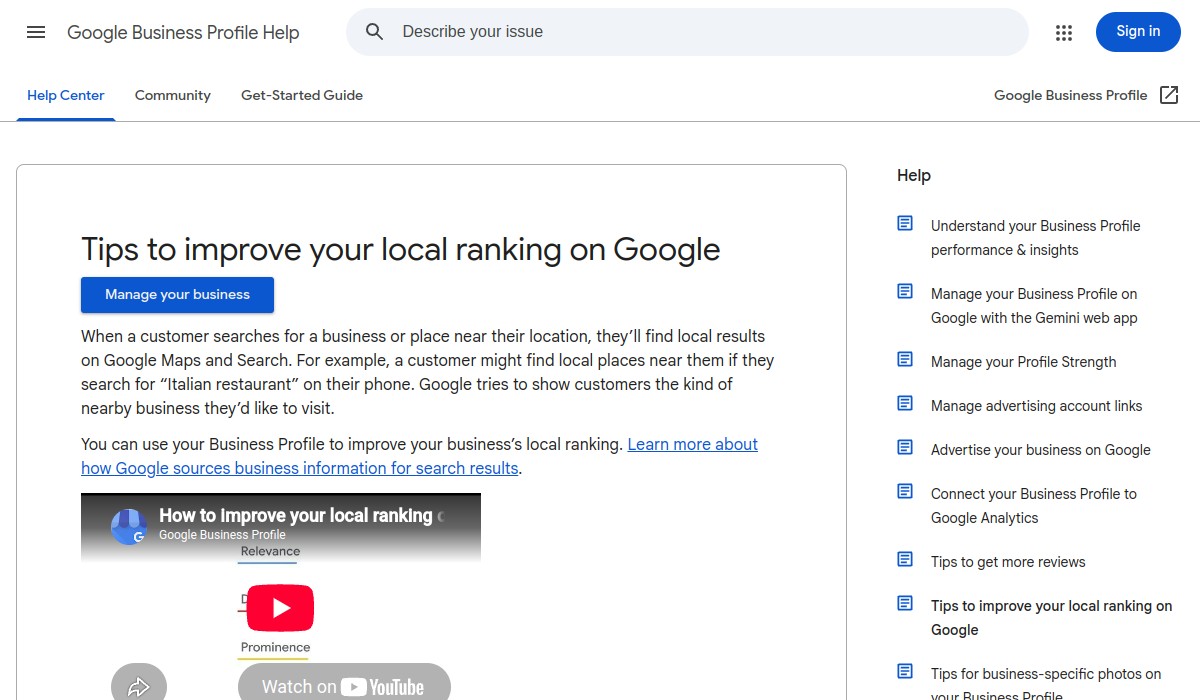
Verified source context: Google says local results are mainly based on relevance, distance, and prominence. Complete and accurate Business Profile information can make a profile more likely to appear for relevant local searches. Read Tips to improve your local ranking on Google.
Verified source context: Google recommends crawlable anchor elements, descriptive and concise anchor text, and contextual internal links. It also recommends citing useful external sources when doing so helps readers. Read Link best practices for Google.
What an AI SEO Agent Actually Does

An AI SEO agent is software that uses artificial intelligence to automate parts of search engine optimization. For a local business, that typically means tasks like keeping your Google Business Profile accurate, identifying content opportunities, and tracking how visible you are in search results. Some agents also help with generative engine optimization (GEO), which aims to make your business more likely to appear in AI-generated answers from tools like ChatGPT or Google's AI features.
However, not every tool does all of these things. Some focus only on keyword research or content generation. Others manage local listings or monitor reviews. Before comparing options, define the specific outcome you need. For example, if your goal is to appear in Google Maps results, you need a tool that helps with your Business Profile. If your goal is to be mentioned in AI answers, you need a tool that addresses AI search visibility. The two goals are related but not identical.
Separate Google Local Ranking from AI Search Visibility
Google's documentation is clear: local results are mainly based on relevance, distance, and prominence. Complete and accurate Business Profile information can make your profile more likely to appear for relevant local searches. This is a confirmed fact from Google's own guidance on improving local rankings.
AI search features, such as Google's AI Overviews or AI Mode, follow different systems. Google states that helpful, reliable, people-first content and standard technical SEO apply to both regular Google Search and Google's AI features. There is no special optimization or additional technical requirement for AI Overviews or AI Mode. A page must be indexed and eligible for a Search snippet to be eligible as a supporting link, but crawling, indexing, rankings, and inclusion are never guaranteed.
This distinction matters when evaluating an AI SEO agent. A tool that promises to improve your Google Maps ranking is working with relevance, distance, and prominence. A tool that promises to get you cited in AI answers is working with content quality and technical eligibility. Be wary of any vendor that blurs these two systems or claims a single action will boost both.
What to Compare Before Subscribing

Use the following criteria to evaluate any AI SEO agent. These are based on Google's publicly stated guidance and practical considerations for local businesses.
1. Does it help you maintain a complete and accurate Google Business Profile?
Google says that complete and accurate Business Profile information can help a business appear for relevant local searches. An AI SEO agent should help you keep your profile information current, including your business name, address, phone number, hours, and categories. It should also help you add photos and videos that show what your business offers. However, do not accept a tool that prescribes an arbitrary photo quota or posting cadence as a ranking factor. Google does not state that profile photos create freshness or directly improve rankings.
2. Does it produce helpful, people-first content?
For both regular Google Search and Google's AI features, Google recommends helpful, reliable, people-first content. An AI SEO agent that generates content should help you create articles that answer real customer questions, not just stuff keywords. It should also follow standard technical SEO practices, such as using crawlable links and descriptive anchor text. Google recommends crawlable anchor elements, descriptive and concise anchor text, and contextual internal links. It also recommends citing useful external sources when doing so helps readers.
3. Does it track the right metrics?
An AI SEO agent should provide clear reporting on the metrics that matter to your business, such as search impressions, clicks, and customer actions. Be cautious of tools that report vanity metrics like "AI visibility score" without explaining how they are calculated. Also, do not accept claims that a tool can guarantee rankings or AI mentions. Google explicitly states that crawling, indexing, rankings, and inclusion are never guaranteed.
4. Does it respect Google's guidance on AI features?
Google's documentation on AI features is limited but clear: there is no special optimization for AI Overviews or AI Mode. A page must be indexed and eligible for a Search snippet to be eligible as a supporting link. An AI SEO agent should not claim to have a secret formula for AI visibility. Instead, it should focus on established SEO practices that apply to all search features.
Red Flags to Avoid
When evaluating AI SEO agents, watch for these warning signs:
- Guaranteed rankings or AI mentions. No tool can guarantee specific positions in Google or inclusion in AI answers. Google's own documentation says rankings and inclusion are never guaranteed.
- Claims that local ranking factors apply to AI search. Relevance, distance, and prominence determine local results, not AI Overviews or AI Mode. A vendor that conflates the two is either misinformed or misleading.
- Prescribed numeric quotas. Be wary of tools that insist on a specific number of photos, posts, or reviews per week as a ranking requirement. Google does not state such quotas.
- Vague "AI visibility" metrics. If a tool reports an AI visibility score but cannot explain how it is calculated or what it measures, treat it with skepticism.
- Promises of immediate results. SEO takes time. A tool that promises overnight success is likely overstating its capabilities.
A Practical Next Step
Start by auditing your current Google Business Profile. Is your information complete and accurate? Are your photos and videos up to date? Then, review your website content. Does it answer the questions your customers actually ask? These two steps align with Google's confirmed guidance and will help you evaluate any AI SEO agent more effectively.
If you are considering an AI SEO agent, ask the vendor directly: "How does your tool help me maintain a complete and accurate Business Profile?" and "How does your tool help me create helpful, people-first content?" The answers will reveal whether the tool is grounded in Google's actual guidance or in marketing hype.
For a deeper comparison of AI SEO tools, see our buyer's guide to AI SEO tools. If you want to understand how an AI SEO agent can help with Google Maps and AI search visibility, read our practical guide for local businesses.