
Updated:
Choosing a local SEO tool is not about finding the one with the most features or the boldest claims. It is about matching a tool's actual capabilities to the outcomes you need: better visibility in local search results, more qualified traffic, and a Google Business Profile that works for you. This guide gives you a clear evaluation framework, separates neutral advice from sales copy, and ends with a decision checklist you can use today.
Verified source context: Google recommends crawlable anchor elements, descriptive and concise anchor text, and contextual internal links. It also recommends citing useful external sources when doing so helps readers. Read Link best practices for Google.
What a Good Choice Must Accomplish
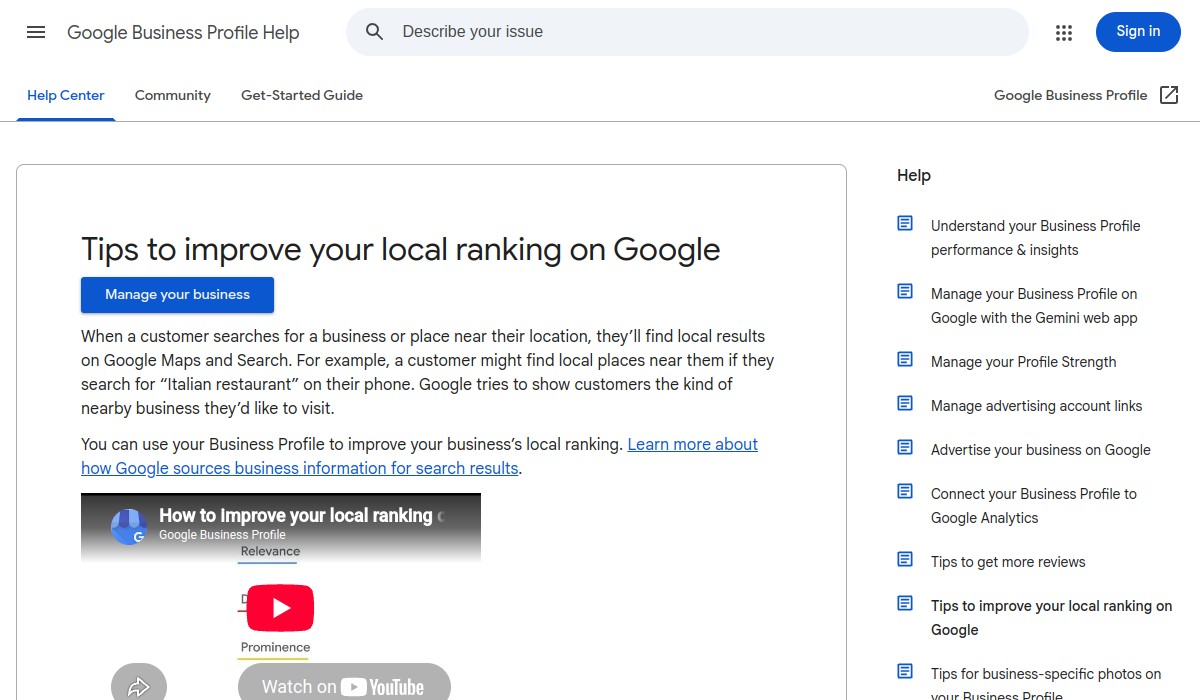
Before comparing features, define the outcome you need. A good local SEO tool should help you manage the three factors Google says drive local results: relevance, distance, and prominence. According to Google's guidance on improving local rankings, complete and accurate Business Profile information can make your profile more likely to appear for relevant local searches. That means the tool should help you keep your business name, address, phone number, categories, hours, and attributes accurate and consistent.
Beyond profile management, the tool should help you monitor and improve your presence across the places customers look. That includes tracking your rankings in local map packs, managing reviews, and identifying opportunities to improve your website's local relevance. The tool should also give you clear, actionable reports—not just dashboards full of numbers you cannot act on.
Finally, a good choice must fit your workflow. If you run a single location, you do not need an enterprise platform built for hundreds of franchises. If you manage multiple locations, you need bulk editing and consistent reporting. The right tool reduces manual work without forcing you to change how you operate.
Evaluation Criteria That Matter
Use these criteria to compare tools side by side. They are based on what Google says matters for local search, not on vendor marketing.
- Business Profile management: Can the tool update your Google Business Profile directly, or does it only provide suggestions? Direct integration saves time and reduces errors.
- Listing accuracy and distribution: Does it sync your business information across major directories and data aggregators? Inconsistent citations can confuse customers and search engines.
- Review monitoring and response: Does it aggregate reviews from Google, Yelp, and other platforms? Can you respond from one dashboard? Review volume and quality are part of prominence.
- Local rank tracking: Does it track your position in the local map pack for your target keywords? Can it track by zip code or neighborhood, not just city?
- Reporting and insights: Are reports clear and tied to actions? Can you see trends over time and identify what changed?
- Ease of use and support: How steep is the learning curve? Is there onboarding help, documentation, or responsive support when you need it?
- Pricing transparency: Are plans and limits clear before you sign up? Avoid tools that hide costs or require a sales call for basic pricing.
Do not evaluate tools solely on the number of features. A tool with 50 features you never use is less valuable than one with 10 features that solve your specific problems.
Red Flags to Avoid
Some local SEO tools make promises that Google itself says no tool can guarantee. Watch for these warning signs:
- Guaranteed rankings: No tool can guarantee a specific position in Google Maps or organic results. Google's algorithms change, and rankings depend on many factors outside any tool's control.
- Secret or proprietary ranking factors: If a vendor claims to know a hidden ranking factor that Google does not publicly acknowledge, be skeptical. Google's public guidance on local ranking is clear: relevance, distance, and prominence.
- Automated review generation: Tools that promise to generate positive reviews automatically may violate platform policies. Encourage genuine reviews from real customers instead.
- Vague pricing or long-term contracts: If you cannot see what you will pay without talking to a salesperson, or if you are locked into a year-long contract before testing the tool, proceed with caution.
- Overemphasis on vanity metrics: A tool that reports only impressions or clicks without connecting them to business outcomes may not help you make decisions.
Also be wary of tools that claim to optimize for "AI search" or "ChatGPT" in ways that Google does not support. Google's guidance on AI features is clear: there is no special optimization for AI Overviews or AI Mode. Standard SEO practices—helpful content, technical quality, and crawlability—remain the foundation. A tool that promises otherwise is selling hype.
Questions to Ask Before You Commit
Use these questions in demos or sales conversations to uncover whether a tool fits your needs:
- Can I manage my Google Business Profile directly from this tool, or do I need to switch to Google's interface?
- How does the tool handle multi-location businesses? Can I bulk edit and get consolidated reports?
- What exactly does the rank tracker measure? Does it show map pack positions, organic positions, or both?
- How are reviews collected and monitored? Can I respond to Google reviews from the dashboard?
- What happens to my data if I cancel? Can I export my listings, reviews, and reports?
- Is there a free trial or a money-back period? Can I test with my own business data before paying?
- What support is included? Is there a knowledge base, live chat, or phone support?
Do not accept vague answers. A reputable vendor will explain exactly what the tool does and does not do.
Decision Checklist
Use this checklist to score each tool you are considering. Mark each item as Yes or No, then compare totals.
| Checklist Item | Yes | No |
|---|---|---|
| Directly manages Google Business Profile | ☐ | ☐ |
| Syncs listings across major directories | ☐ | ☐ |
| Aggregates and allows responding to reviews | ☐ | ☐ |
| Tracks local map pack rankings by location | ☐ | ☐ |
| Provides clear, actionable reports | ☐ | ☐ |
| Transparent pricing with no hidden fees | ☐ | ☐ |
| Offers a free trial or money-back period | ☐ | ☐ |
| No guaranteed ranking claims | ☐ | ☐ |
| Fits your budget and team size | ☐ | ☐ |
If a tool scores mostly "No," it is probably not the right fit. If it scores mostly "Yes," you have a strong candidate.
Frequently Asked Questions
What is the best local SEO tool for a small business?
The best tool depends on your specific needs. For a single-location business, look for a tool that directly manages your Google Business Profile, tracks local map pack rankings, and aggregates reviews. Avoid enterprise platforms with features you will not use. Test a few with free trials to see which fits your workflow.
Can local SEO tools guarantee higher rankings?
No. Google's algorithms are complex and change frequently. No tool can guarantee a specific position in Google Maps or organic results. Be wary of vendors that promise guaranteed rankings; they are likely overstating their capabilities.
Do I need a separate tool for AI search optimization?
No. Google's guidance on AI features is clear: there is no special optimization for AI Overviews or AI Mode. Standard SEO practices—helpful content, technical quality, and crawlability—remain the foundation. Focus on those fundamentals rather than tools that claim to optimize for AI search.
Next Step: Put Your Shortlist to the Test
Once you have narrowed your options, test the top two or three tools with your own business data. Most reputable tools offer a free trial or a limited free plan. During the trial, focus on the tasks you will do weekly: updating your profile, checking rankings, responding to reviews. If the tool saves you time and gives you clear insights, it is a good sign.
For a deeper look at how AI is changing local SEO, see our guide on AI-powered local SEO software. If you are also evaluating broader SEO tools, our AI SEO tools buyer's guide uses the same evaluation framework.
Remember: the best local SEO tool is the one you will actually use consistently. Choose based on your specific needs, not on a list of features you will never touch.