
Updated:
AI-powered local SEO software promises to handle the repetitive work of keeping your business visible in local search. But not every tool delivers. Some automate the wrong things, some hide behind vague dashboards, and some make claims that Google itself says no tool can guarantee. This guide separates what a good choice must accomplish from what you should verify before paying.
What a Good Choice Must Accomplish
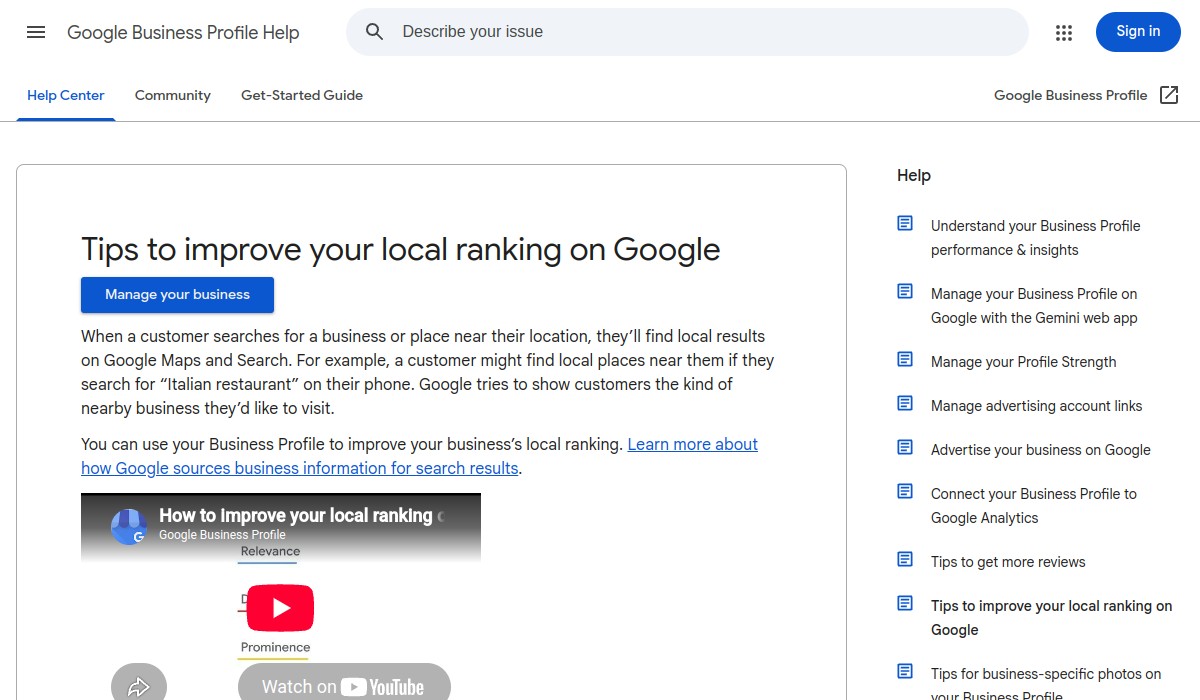
Before comparing features, define the outcome you need. A useful AI local SEO tool should help you improve the three factors Google says drive local results: relevance, distance, and prominence. According to Google's guidance on local ranking, complete and accurate Business Profile information can make your profile more likely to appear for relevant local searches. That means the software should help you keep your profile accurate, complete, and consistent across the web.
Beyond the profile, the tool should support the practices that help customers find you: publishing helpful, people-first content on your website, encouraging authentic reviews, and adding clear photos or videos. Google's image SEO best practices recommend helping Google discover images and optimizing the pages where they appear. A good AI tool should make these tasks easier, not just report on them.
Finally, the tool should help you understand whether your visibility is actually improving. That means tracking rankings, calls, or other measurable outcomes—not just activity counts. If the software cannot show you a clear before-and-after, it is not doing its job.
Evaluation Criteria That Matter
Use these criteria to compare options. They are based on what Google publicly says matters for local search and on what a responsible tool should do.
- Business Profile management: Does the tool help you keep your name, address, phone, hours, categories, and services accurate and complete? Google says complete and accurate information can help you appear for relevant searches.
- Review support: Does it help you gather more reviews and respond to them helpfully? Google says more reviews and positive ratings can help local ranking, and helpful replies can help you stand out—but Google does not say replies directly raise ranking.
- Photo and video assistance: Does it help you add and optimize photos or videos? Google recommends helping it discover images and optimizing the pages where they appear.
- Website content support: Does it help you publish helpful, people-first content that follows standard SEO practices? Google's link best practices recommend crawlable links and descriptive anchor text, and its guidance on AI features says established SEO practices remain relevant.
- Reporting and evidence: Does it show you real movement in rankings, visibility, or calls? Can you verify the data independently? Avoid tools that only show activity metrics like "tasks completed" or "posts published."
- Transparency about limitations: Does the tool clearly state that no one can guarantee rankings or AI inclusion? Google's guidance on third-party SEO tools warns that tools cannot guarantee performance.
Red Flags to Watch For
Some AI local SEO tools overpromise or hide behind jargon. Watch for these warning signs:
- Guaranteed rankings or AI mentions: No tool can guarantee a specific position in Google Maps or inclusion in AI Overviews. Google explicitly warns that tools cannot guarantee performance.
- Vague "AI optimization" claims: If a tool says it optimizes for "AI search" without explaining what it actually does, be skeptical. Google's guidance on AI features says there is no special optimization required beyond standard SEO practices.
- Invented ranking factors: Some tools claim that posting frequency, photo quotas, or review response speed directly boost rankings. Google does not support these as ranking factors. Treat such claims as unverified.
- Opaque reporting: If the tool shows a "visibility score" but you cannot see the underlying data or verify it against Google Search Console or your own analytics, it may be hiding poor performance.
- Pressure to buy quickly: A legitimate tool should let you evaluate it without high-pressure tactics. Look for a trial period or clear cancellation policy.
Questions to Ask Before You Commit
Use these questions in demos or sales calls. The answers will reveal whether the tool is a good fit.
- How exactly does the tool help me keep my Google Business Profile complete and accurate? Can I see a sample of the changes it makes?
- How does it help me get more reviews and respond to them? Does it automate responses, and if so, can I review them before they go live?
- How does it help with photos and videos? Does it optimize them for Google's image search?
- How does it help with website content? Does it publish automatically, and can I control the quality and relevance?
- What reporting do you provide? Can I see actual ranking changes, call tracking, or other measurable outcomes? Can I export the data?
- What limitations should I know about? What can the tool not do?
- What is the cancellation policy? Is there a trial period?
Decision Checklist
Use this table to compare up to three tools. Mark each criterion as Yes or No based on your evaluation.
| Criterion | Tool A | Tool B | Tool C |
|---|---|---|---|
| Helps keep Business Profile complete and accurate | ☐ | ☐ | ☐ |
| Supports review gathering and helpful responses | ☐ | ☐ | ☐ |
| Assists with photo and video optimization | ☐ | ☐ | ☐ |
| Helps publish helpful, people-first website content | ☐ | ☐ | ☐ |
| Provides verifiable ranking or call data | ☐ | ☐ | ☐ |
| Clearly states limitations and no guarantees | ☐ | ☐ | ☐ |
| Offers a trial or clear cancellation policy | ☐ | ☐ | ☐ |
If a tool fails more than one or two of these criteria, it is probably not a good investment. The best AI local SEO software will be transparent about what it does, show you real evidence of improvement, and align with Google's publicly stated guidance.
Frequently Asked Questions
Can AI local SEO software guarantee higher rankings?
No. Google's guidance on third-party SEO tools explicitly warns that tools cannot guarantee performance. Any tool that promises a specific ranking or guaranteed inclusion in AI features is making a claim that Google says no tool can support.
Does AI local SEO software help with Google AI Overviews?
Google's guidance on AI features says there is no special optimization required beyond standard SEO practices. A page must be indexed and eligible for a Search snippet to be eligible as a supporting link, but crawling, indexing, rankings, and inclusion are never guaranteed. So a tool can help you follow standard SEO practices, but it cannot promise AI visibility.
What should I look for in reporting?
Look for verifiable data that shows real movement in rankings, calls, or other measurable outcomes. Avoid tools that only show activity metrics like "tasks completed" or "posts published." You should be able to export the data and compare it against Google Search Console or your own analytics.
For a deeper look at how AI can help with Google Maps and AI search visibility, see our article on how an AI SEO agent helps local businesses. If you are specifically evaluating Google Business Profile optimization tools, our Google Business Profile optimization buyer's guide offers additional criteria and red flags.